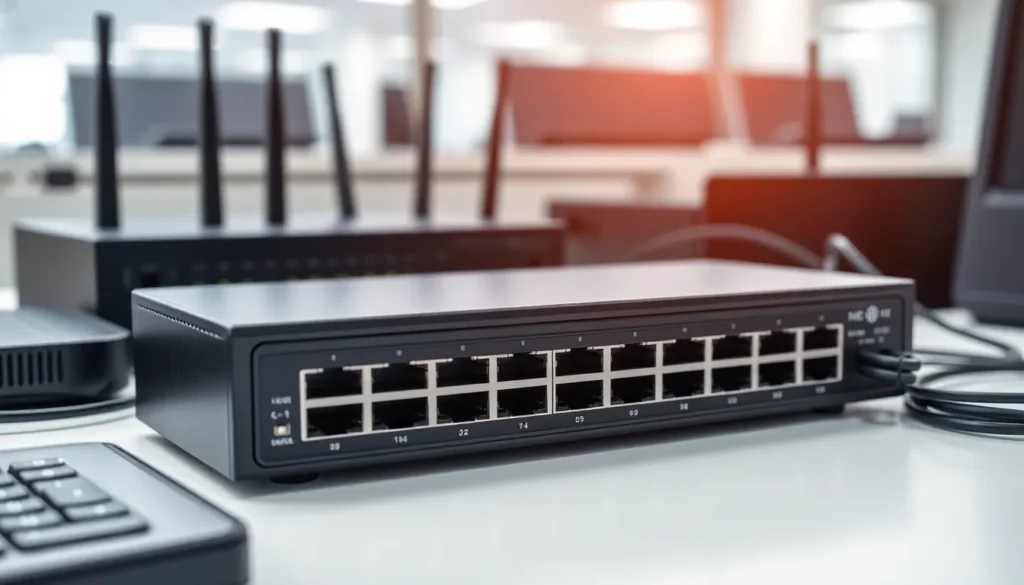
In the bustling world of networking, network switches are the unsung heroes, tirelessly working behind the scenes. Picture them as the friendly traffic cops of data, ensuring packets flow smoothly without any collisions. Without these little powerhouses, chaos would reign in the digital realm, and nobody wants to experience a data traffic jam!
Overview of Network Switches
Network switches serve a critical function in data networking, connecting devices within a local area network (LAN). These components operate at the data link layer (Layer 2) and sometimes at the network layer (Layer 3), directing data packets based on their MAC addresses. Each switch port forms a unique connection, allowing multiple devices to communicate simultaneously without interference.
Data traffic management occurs through intelligent switching. When a switch receives a data packet, it examines the destination address and forwards the packet only to the specific port assigned to that address. This targeted approach minimizes network congestion and maximizes bandwidth efficiency.
Various types of network switches cater to different needs. Unmanaged switches provide plug-and-play capabilities and basic connectivity for small networks. Managed switches offer more advanced features, such as VLAN support, traffic monitoring, and security protocols, making them suitable for larger, more complex environments.
Enhancing performance involves the use of features such as Quality of Service (QoS). QoS helps prioritize critical data, improving performance for applications like video conferencing and VoIP. Additionally, some switches support link aggregation, combining multiple connections for increased bandwidth.
Switches come equipped with a range of ports, typically varying from five to 48, depending on the model. These ports determine scalability, allowing networks to expand as necessary without significant redesign.
Network switches play a pivotal role in ensuring efficient data communication. Their ability to manage data flow effectively influences overall network performance and reliability.
Types of Network Switches
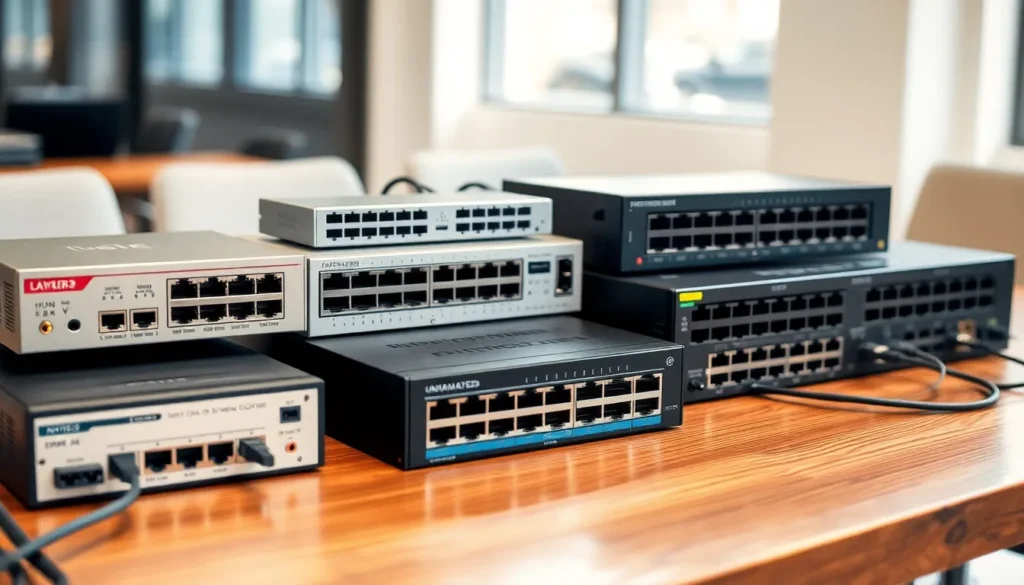
Various types of network switches cater to different networking needs. Understanding these types helps in selecting the right switch for specific requirements.
Managed vs. Unmanaged Switches
Managed switches offer configurability and control. They allow for features like VLANs and Quality of Service, providing network administrators with tools for monitoring and managing traffic efficiently. Unmanaged switches, in contrast, provide basic connectivity with no advanced options. They function well in simple network setups, offering plug-and-play convenience. Choosing between them depends on network size and management needs.
Layer 2 vs. Layer 3 Switches
Layer 2 switches operate at the data link layer, directing traffic based on MAC addresses. These switches facilitate communication within a local area network effectively. Layer 3 switches, however, incorporate routing functions, allowing them to handle traffic between different networks. They utilize IP addresses for forwarding decisions, which enhances communication capabilities beyond a single LAN. Deciding between Layer 2 and Layer 3 switches hinges on the complexity of the network’s routing requirements.
Key Features to Consider
When selecting a network switch, several key features demand attention to ensure optimal performance and reliability.
Speed and Performance
Speed and performance represent critical factors for network efficiency. Managed switches often support higher throughput with features like Gigabit Ethernet, which offers data transfer rates up to 1 Gbps. Low latency contributes to improved user experience, especially for time-sensitive applications such as video conferencing or gaming. Quality of Service (QoS) functionality helps prioritize vital data packets, ensuring those critical for operations receive the necessary bandwidth. Organizations requiring high efficiency benefit from link aggregation, as it combines multiple links to boost overall bandwidth availability.
Port Density
Port density is crucial for accommodating device connections in expanding networks. Depending on the needs, switches may offer anywhere from five to 48 ports. High-density switches provide flexibility, allowing network administrators to connect numerous devices without requiring additional hardware. Port density not only facilitates growth but also simplifies network management, as fewer switches need handling. Moreover, modular switches provide scalability, enabling users to add or remove ports according to evolving requirements.
Security Features
Security features protect network integrity and data confidentiality. Managed switches often include robust security options such as access control lists (ACLs) to regulate device access. Additionally, features like port security limit the number of devices connecting through a specific port, preventing unauthorized access. Encrypted traffic support secures data transmissions, mitigating risks related to interception. Furthermore, monitoring capabilities help detect anomalies, allowing administrators to respond to threats swiftly. Enhanced security ensures network reliability and fosters trust among users.
Benefits of Using Network Switches
Network switches enhance communication efficiency within local area networks. Connectivity improves through their ability to manage data traffic effectively, ensuring each device receives the appropriate data packets.
Bandwidth optimization occurs as switches forward packets solely to specified ports based on MAC addresses. Reduced congestion leads to smoother operation, allowing multiple devices to transmit data concurrently.
Scalability represents another significant benefit. Switches accommodate networks expanding from five to 48 ports, providing flexibility for future growth.
Advanced features available in managed switches further increase control. Network administrators utilize these features for monitoring traffic, implementing VLANs, and configuring Quality of Service (QoS). Prioritization of critical applications enhances performance for time-sensitive services, such as video conferencing.
Security strengthens with advanced switches as well. Access control lists (ACLs) and encrypted traffic support protect the network against unauthorized access, confirming the integrity of the data flow.
Cost-effectiveness also plays a role. Unmanaged switches offer budget-friendly solutions without sacrificing essential connectivity. Their plug-and-play functionality delivers straightforward installation for smaller setups.
Overall, using network switches significantly improves network performance, reliability, and security. Each of these advantages contributes to a streamlined and efficient approach to managing data communication.
Common Use Cases
Network switches find application in various environments, each leveraging their unique capabilities for optimal data management. In small offices, unmanaged switches provide straightforward connectivity. These basic devices allow easy connection of computers and printers without complex setups.
Businesses utilizing larger networks benefit from managed switches, which offer advanced features for better control. VLAN support enables segmentation of the network into multiple logical groups, improving security and performance. Traffic monitoring facilitates efficient usage and ensures that critical applications receive the necessary bandwidth.
Educational institutions use network switches to connect numerous devices across campuses. Layer 2 switches efficiently manage communications within local networks, while Layer 3 switches link different subnets. These setups enhance collaboration among students and staff.
Data centers rely on high-performance switches to handle massive data traffic. Features like link aggregation increase available bandwidth, which is crucial for handling high-demand applications. Quality of Service prioritizes time-sensitive data, ensuring applications like video conferencing perform optimally.
Retail environments often use switches for managing point-of-sale systems. Connecting these systems to the main network supports seamless transaction processing, improving customer service. Security features in managed switches help safeguard sensitive payment information.
Manufacturing plants implement switches to enable connectivity among IoT devices. These devices send and receive real-time data, optimizing operations and monitoring machinery. Effective data flow facilitates improved decision-making and operational efficiency.
Hospital networks greatly benefit from robust switch setups. Connecting medical devices to the network ensures that patient data transfers quickly and securely. Prioritizing medical data traffic maintains performance during peak usage times.
Overall, the versatility of network switches allows different sectors to enhance their operational efficiency and communication.
Network switches are indispensable for effective data management in modern networking. Their ability to streamline communication and optimize bandwidth makes them vital for various environments. Whether it’s a small office or a large data center, the right switch can enhance performance and security.
Choosing between unmanaged and managed switches depends on specific needs. Managed switches offer advanced features for larger networks while unmanaged switches provide simplicity for smaller setups. Regardless of the choice, the benefits of improved efficiency and scalability are clear.
As technology continues to evolve, understanding the role of network switches will remain crucial for anyone looking to build a robust and reliable network infrastructure.