Imagine walking into your favorite store and being greeted by a digital assistant that knows your name, your preferences, and even suggests new products you might love. Sounds like science fiction, right? Well, with cloud computing in retail, this isn’t just a pipe dream: it’s rapidly becoming a reality. This technology is revolutionizing the way retailers operate, manage inventory, and connect with customers. Join us as we explore how cloud computing has evolved in retail, its benefits, key technologies, challenges, and what the future may hold.
The Evolution Of Cloud Computing In Retail
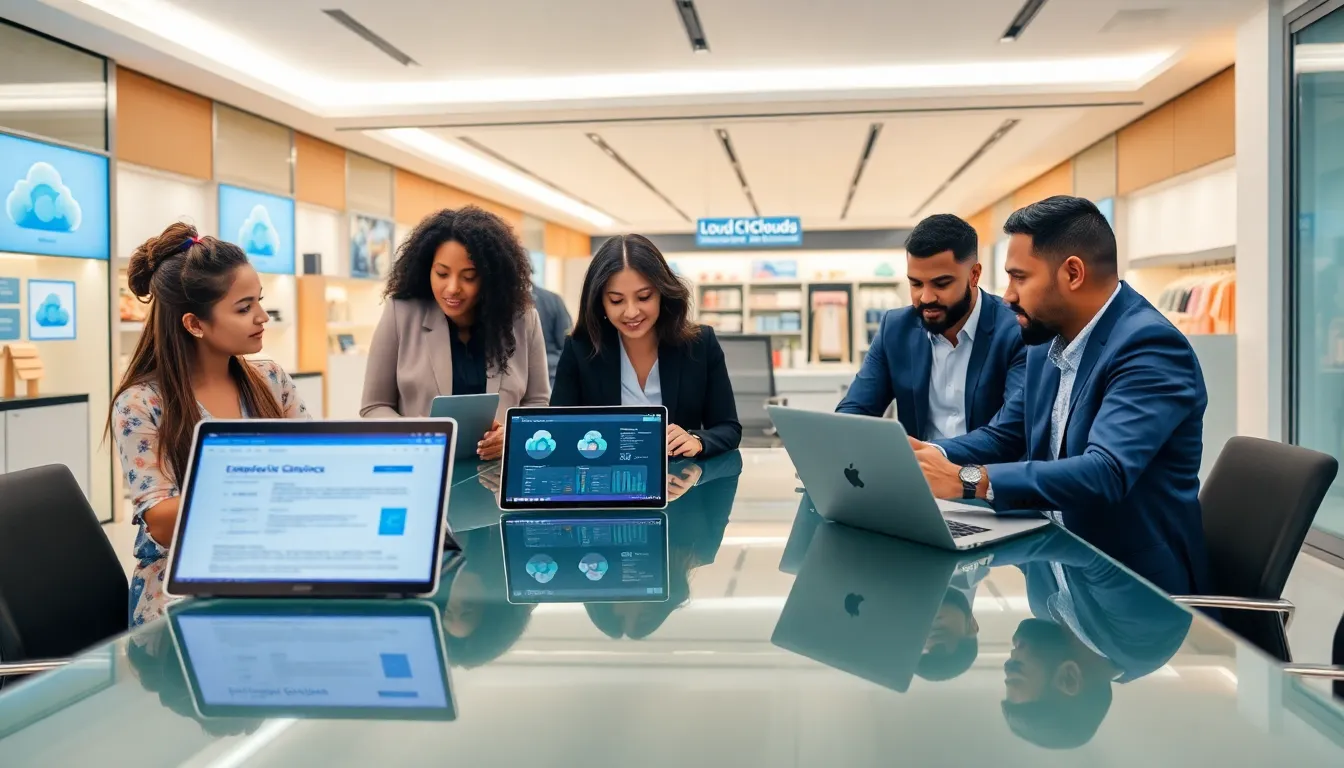
Cloud computing has drastically changed how businesses function, and the retail sector is no exception. In the early days, retailers relied heavily on on-premises servers and traditional IT infrastructure. Imagine stacks of boxes gathering dust in the corner of an office, this was how data was stored before the cloud came along. As technology progressed, so did the needs of retailers. Cloud computing arrived like a superhero, ready to save the day by providing flexibility, scalability, and efficiency. Today’s retailers can scale their operations instantly and store immense amounts of data without the hassle of physical hardware. The shift from local servers to cloud services has allowed retailers to adopt innovative solutions that improve customer experiences and drive sales.
Notably, giants like Amazon and Walmart have led the charge in adopting cloud technology, paving the way for smaller retailers to follow suit. They transformed the retail landscape by embracing data analytics, online shopping platforms, and efficient inventory management, all made possible through the cloud.
Benefits Of Cloud Computing For Retailers
Cloud computing offers a treasure trove of benefits for retailers across the globe. For starters, it dramatically reduces operating costs. With cloud services, there’s no need for hefty upfront investments in hardware: retailers pay for what they use, much like a pizza joint delivering slices instead of an entire pizza. Flexibility is another significant benefit: retailers can quickly scale up or down based on fluctuations in demand. Think of it as having an elastic waist on your favorite pair of jeans, perfect for those unexpected holiday sales.
Also, cloud computing enhances collaboration. Teams can access data and work on projects in real-time, no matter where they are. This collaborative environment fosters innovation and allows retailers to respond to market changes swiftly. Improved data security is another boon, as cloud service providers typically offer cutting-edge protection measures that can shield sensitive customer information from cyber threats.
Key Cloud Technologies Revolutionizing Retail
Several cloud technologies are reshaping the retail landscape today. First up is Artificial Intelligence (AI). When integrated into cloud systems, AI helps retailers analyze customer data, predict trends, and create personalized marketing strategies. It’s like having a crystal ball, but one that’s backed by concrete data.
Next, we have Internet of Things (IoT) devices. These connected gadgets collect data on customer behavior and product usage, offering retailers valuable insights into consumer preferences. From smart shelves that notify staff when stock is low to connected kiosks that enhance in-store experiences, IoT is transforming the retail environment.
Finally, Big Data Analytics is a game-changer. By analyzing vast amounts of data stored in the cloud, retailers can identify purchasing patterns, optimize inventory, and create targeted marketing campaigns. This data-driven approach ensures that customers find what they want, when they want it.
Challenges Of Implementing Cloud Solutions In Retail
While the benefits of cloud computing are numerous, retailers do face challenges in adopting these technologies. For starters, not every retailer has deep pockets. Smaller retailers might struggle to find the budget to carry out advanced cloud solutions. Developers and IT teams are often in high demand, and securing top talent can become a costly try.
Also, data migration can be a challenging job. Transitioning existing data to a cloud platform requires careful planning to avoid potential losses. Recognizing what data to move and ensuring compatibility with new systems adds another layer of complexity.
Finally, cybersecurity remains a significant concern. As more data is stored in the cloud, it becomes even more critical for retailers to prioritize security measures. A single breach can jeopardize their reputation and customer trust.
Case Studies: Successful Cloud Implementations In Retail
A few retailers have excelled in leveraging cloud computing, and their success stories are worth noting. Nike, for example, has made massive strides in utilizing cloud technology to enhance its direct-to-consumer sales. Nike migrated its online platforms to the cloud, resulting in greater scalability and a seamless shopping experience for customers. This transition allowed them to launch new products faster and respond quickly to consumer feedback.
Another exemplary case is Starbucks. The coffee chain embraced cloud computing to streamline its operations and improve customer engagement. By integrating cloud-based data analytics, they now offer personalized promotions and loyalty rewards based on customer preferences. The result? Satisfied customers who keep coming back for that much-needed caffeine fix.
Future Trends Of Cloud Computing In Retail
So what’s next for cloud computing in retail? One significant trend is the rise of edge computing. With edge computing, data processing occurs closer to the source, allowing for faster response times and reduced latency. Imagine in-store applications updating in real time based on customer behavior, the possibilities are exciting.
Also, sustainability is becoming increasingly important to consumers. Retailers are now exploring cloud solutions that minimize energy consumption, reduce waste, and contribute to greener practices. Not only does this resonate with eco-conscious shoppers, but it also improves the retailer’s public image.
Finally, augmented reality (AR) and virtual reality (VR) integration is set to explode in retail. As AR and VR technologies become more accessible, retailers will likely use them to enhance online and in-store shopping experiences.