
In a world where data seems to multiply faster than rabbits, cloud computing swoops in like a superhero with a cape made of fiber optics. No more worrying about running out of storage on your trusty old hard drive or losing that important document because you forgot to hit save. With cloud computing, your files float in the digital sky, ready to be accessed anytime, anywhere—like magic, but with a lot more tech jargon.
Overview of Cloud Computing
Cloud computing serves as a flexible platform for data management, providing a vast array of services and storage solutions. Security benefits factor significantly into its appeal, as data stored in the cloud typically enjoys advanced encryption and access controls. Scalability allows businesses to adjust resources based on their needs, avoiding waste linked to underutilized hardware.
Collaboration becomes effortless with cloud computing, enabling multiple users to access files simultaneously from different locations. This method enhances productivity, especially within teams spread across various geographic regions. Cost-effectiveness emerges as another key advantage; businesses pay only for the resources they consume.
Different models of cloud computing exist, including public, private, and hybrid clouds. Public clouds offer services over the internet to multiple organizations, while private clouds provide exclusive environments tailored for single organizations. Hybrid clouds combine elements of both, granting flexibility in deployment and management.
Numerous service types within cloud computing cater to diverse needs. Infrastructure as a Service (IaaS) allows users to access virtualized computing resources, while Platform as a Service (PaaS) provides a platform for developers to build applications. Software as a Service (SaaS) includes software delivered over the internet, simplifying access to essential applications.
Innovative developments in cloud technologies continuously reshape how individuals and organizations manage their data. Trends such as edge computing and serverless architectures enhance efficiency while reducing latency. In light of these advancements, cloud computing remains a cornerstone of modern IT infrastructure, driving productivity and efficiency across sectors.
Types of Cloud Computing
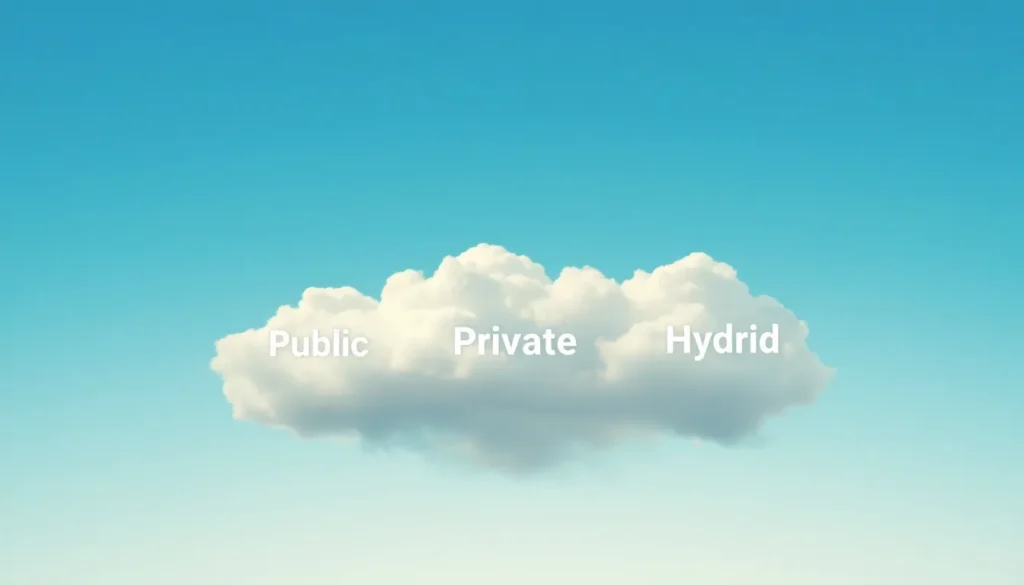
Cloud computing includes several models tailored to diverse organizational needs, providing various benefits and functionalities.
Public Cloud
Public cloud services are hosted by third-party providers. Organizations leverage the infrastructure and resources made available over the internet. This model allows users to share computing capacity with other organizations, which leads to cost savings. Scalability is a major advantage, enabling rapid resource allocation based on demand. Examples of public cloud providers include Amazon Web Services, Microsoft Azure, and Google Cloud Platform. These platforms offer flexibility and eliminate upfront infrastructure costs.
Private Cloud
Private clouds cater to a single organization, providing greater control and customization. They can be hosted on-premises or by an external service provider. Security features are enhanced, making this model ideal for industries handling sensitive data. Organizations benefit from dedicated resources that improve performance and reliability. Custom applications and settings can be designed to meet specific business requirements. Notably, organizations can leverage private clouds without sharing resources, enhancing data privacy.
Hybrid Cloud
Hybrid clouds combine public and private cloud models, allowing organizations to optimize their IT environments. This approach facilitates workload distribution between both clouds, enabling flexibility and scalability. Companies can maintain sensitive data securely in a private cloud while utilizing the public cloud for less critical operations. Cost savings arise from the ability to use public resources when necessary. Many businesses adopt this model to achieve a balanced strategy that meets varying operational needs while maximizing efficiency.
Benefits of Cloud Computing
Cloud computing offers significant advantages for businesses looking to enhance their operations and optimize resource usage. These benefits include cost efficiency, scalability, and improved collaboration.
Cost Efficiency
Cost efficiency stands out as a prominent benefit of cloud computing. It allows businesses to reduce IT expenses by only paying for the resources they use. Companies can avoid hefty upfront investments in hardware and software. Instead, they can subscribe to cloud services, turning fixed costs into variable costs. This flexibility often leads to increased savings, particularly for small to medium-sized enterprises. Reduced energy consumption and maintenance costs further contribute to lower overall expenses. Organizations can allocate funds towards innovation rather than infrastructure.
Scalability
Scalability serves as another key advantage of cloud computing. Businesses can quickly adjust their resources based on changing demands. Cloud services enable rapid scaling up or down without the need for significant capital investment. This agility ensures companies can maintain performance during peak periods and optimize costs during slower times. Resources can expand to accommodate growth or contract during downturns, providing a tailored approach to data management. Adapting resource capacity happens with ease, ensuring organizations remain competitive in a dynamic market landscape.
Improved Collaboration
Improved collaboration is essential in today’s work environment. Cloud computing facilitates real-time access to data and applications from various locations. Teams can work together seamlessly, regardless of geographical barriers. Multiple users can simultaneously edit documents, enhancing productivity and creativity. This capability fosters a culture of cooperation, leading to quicker decision-making and project completion. Overall, it transforms how teams interact, making collaborative efforts more effective and cohesive across departments and locations.
Challenges of Cloud Computing
Cloud computing offers many benefits, yet it faces significant challenges that organizations must navigate.
Security Concerns
Data breaches pose serious risks in cloud computing. Sensitive information, when stored remotely, becomes a target for cybercriminals. Compliance with regulations like GDPR and HIPAA is crucial, as organizations must protect customer data. Misconfigurations in cloud security settings can lead to unauthorized access. Encryption methods vary among providers, impacting data safety during transmission and storage. Regular audits help identify vulnerabilities, but the shared responsibility model complicates accountability. Organizations should prioritize robust security measures, including multi-factor authentication. Frequent updates to security protocols can mitigate potential threats.
Downtime Risks
Downtime risk represents a critical concern for cloud services. Service interruptions can disrupt business operations, leading to financial losses. Weather events or technical failures may contribute to potential outages. According to industry reports, cloud providers experience downtime, sometimes affecting availability for users. Maintaining an internet connection is essential for accessing cloud services, and any instability can hinder productivity. Service Level Agreements (SLAs) often outline uptime guarantees; however, variability exists among providers. By choosing reliable providers, organizations can minimize downtime risks effectively. Regular backups and disaster recovery plans further enhance resilience against outages.
Future of Cloud Computing
Future trends in cloud computing emphasize the integration of artificial intelligence (AI) and machine learning (ML). These technologies streamline operations, enhance data analysis, and improve decision-making capabilities. Increased automation reduces the need for manual intervention in routine tasks, leading to efficiency.
Data privacy regulations are expected to evolve alongside cloud computing. Compliance with new laws will require providers to implement advanced security measures. Organizations must also ensure that they remain compliant to avoid significant penalties.
Another trend centers around edge computing, enabling processing data closer to its source. This approach minimizes latency, boosts real-time processing capabilities, and enhances user experiences. Companies will likely leverage edge computing to support IoT applications, increasing responsiveness and efficiency.
The demand for multi-cloud strategies continues to grow. Organizations adopt a mix of public and private cloud solutions to avoid vendor lock-in, enhance flexibility, and optimize costs. Many businesses benefit from customizing cloud resources based on specific operational needs.
Sustainability remains a crucial factor in cloud computing’s future. Cloud providers are actively reducing their carbon footprint through renewable energy sources and energy-efficient data centers. Organizations prioritize environmentally friendly practices, making sustainable cloud options increasingly appealing.
Virtual cloud desktops are gaining traction as remote work becomes more prevalent. This technology enables employees to access desktop environments securely from various devices. Companies that utilize virtual desktops often experience improved collaboration and flexibility.
Overall, the future of cloud computing presents opportunities for organizations to innovate and advance their IT infrastructure. Integrating new technologies and implementing robust strategies ensures that businesses remain competitive in a rapidly evolving market.
Cloud computing is reshaping how organizations manage data and collaborate. Its flexibility and scalability enable businesses to adapt to changing demands while optimizing costs. The innovative technologies driving cloud solutions continue to enhance productivity and efficiency across various sectors.
As companies navigate the challenges of security and downtime, the importance of choosing reliable providers and implementing robust security measures cannot be overstated. The future promises further advancements with AI integration, edge computing, and a focus on sustainability, ensuring that cloud computing remains a vital component of modern IT infrastructure. Embracing these changes will empower organizations to thrive in an increasingly digital landscape.